Leading innovations in 2026: the future of laser and bending machinery
The manufacturing industry is entering a new era where precision, speed, and automation are driving production standards. As businesses demand smarter and more efficient equipment, laser cutting and bending machinery are evolving rapidly to meet these expectations. In 2026, innovations in these technologies are shaping the future of fabrication by improving productivity, reducing waste, and enabling higher accuracy.
for essell.co, staying ahead in engineering solutions means embracing these advancements and delivering machinery that aligns with the changing needs of modern manufacturing. This article explores the leading innovations that are transforming the future of laser and bending machinery in 2026.
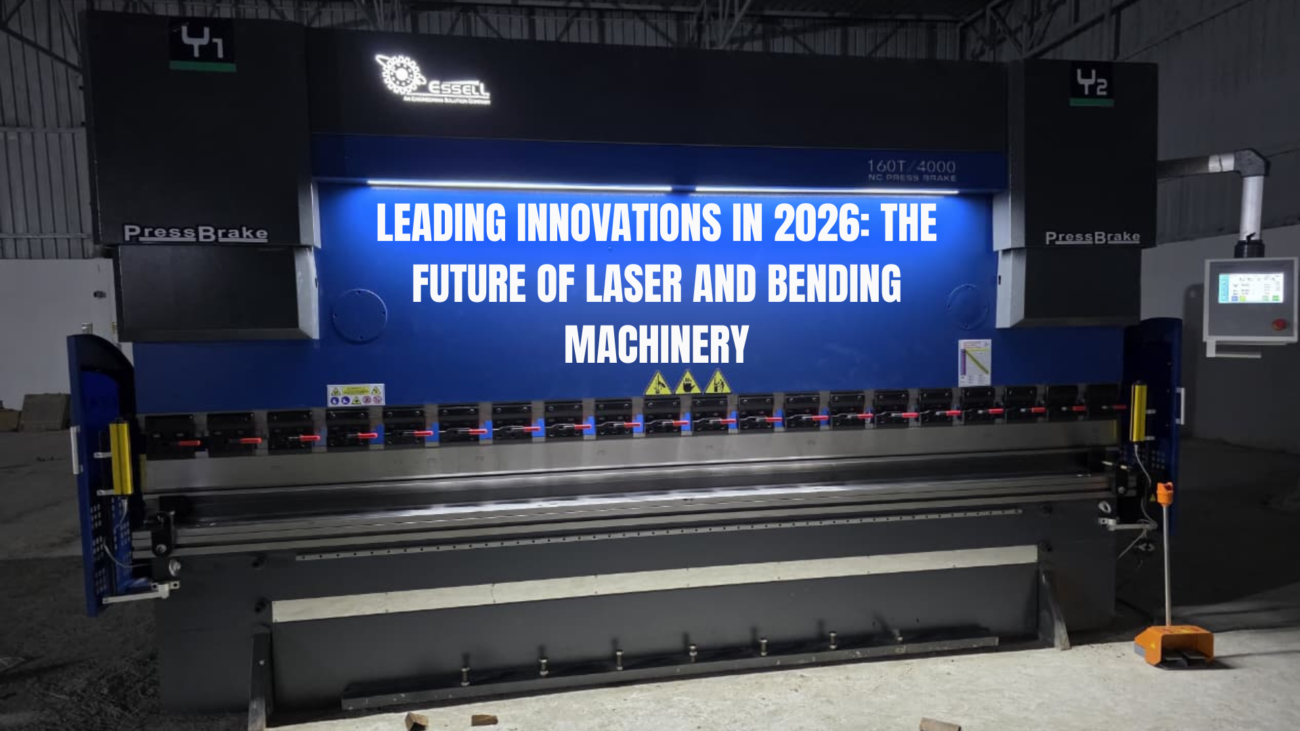
The rise of intelligent manufacturing systems
Modern fabrication equipment is no longer limited to basic mechanical performance. Today’s laser and bending machines are becoming intelligent systems capable of monitoring, analyzing, and optimizing production processes.
These systems provide:
- real-time performance monitoring
- automated parameter adjustments
- predictive maintenance alerts
With smarter systems in place, manufacturers can improve output while minimizing manual intervention.
advanced automation for faster workflows
Automation continues to play a major role in the future of fabrication machinery. In 2026, laser and bending systems are being equipped with advanced automation features that simplify complex operations.
Key benefits include:
- automatic material loading and unloading
- reduced operator dependency
- improved production speed
These advancements help manufacturers streamline operations and increase efficiency across the production line.
Higher precision with improved motion control
Precision is essential in modern manufacturing, especially in industries where even minor deviations can lead to costly errors.
New machinery innovations focus on:
- enhanced servo motor performance
- improved linear guide systems
- better structural stability
These improvements allow laser and bending machines to deliver more accurate and consistent results.
integration with Industry 4.0 platforms
One of the most significant innovations in 2026 is the integration of laser and bending machinery with Industry 4.0 systems.
This enables:
- centralized production monitoring
- data-driven decision-making
- remote diagnostics and support
By connecting machinery to digital platforms, manufacturers gain better control over operations and productivity.
energy-efficient machine design
Energy consumption is a major concern for manufacturers looking to reduce operating costs.
Modern laser and bending systems are now designed with:
- optimized power usage
- efficient cooling mechanisms
- Reduced idle energy consumption
These features improve sustainability while lowering production expenses.
ai-powered optimization capabilities
Artificial intelligence is becoming a valuable component in manufacturing machinery.
AI-driven systems can:
- optimize cutting and bending parameters
- reduce material waste
- improve machine performance over time
This leads to smarter production processes and better resource utilization.
flexible machinery for custom production
The demand for customized fabrication is growing, and machinery must be adaptable to meet these needs.
modern systems now support:
- rapid setup changes
- multi-material processing
- flexible programming options
This flexibility allows businesses to handle diverse projects with greater efficiency.
improved safety and operator assistance
Operator safety remains a top priority in industrial environments.
Innovations in 2026 include:
- advanced sensor systems
- automatic shutdown features
- user-friendly interfaces
These features create safer work environments while improving ease of operation.
smarter software for enhanced control
Software is becoming just as important as the mechanical components of fabrication machinery.
Modern control software offers:
- intuitive machine operation
- integration with design tools
- real-time process optimization
This allows operators to manage production with greater accuracy and efficiency.
Predictive maintenance for reduced downtime
Unexpected downtime can disrupt production schedules and increase costs.
Predictive maintenance technology helps by:
- monitoring machine health
- identifying wear before failures occur
- scheduling maintenance proactively
This ensures smoother operation and improved equipment reliability.
stronger machine construction for durability
As performance demands increase, machinery durability becomes even more important.
Modern laser and bending machines are being built with:
- reinforced structures
- high-quality components
- improved vibration control
These enhancements extend machine life and ensure consistent performance.
faster processing speeds without sacrificing quality
Manufacturers need higher speeds to remain competitive, but not at the expense of precision.
2026 innovations focus on:
- faster cutting cycles
- quicker bending operations
- maintained output quality
This balance between speed and accuracy helps businesses meet production goals efficiently.
Why these innovations matter for manufacturers,
these advancements are not just technological improvements—they directly impact business performance.
benefits include:
- Higher productivity,
- reduced operating costs,
- improved product quality
- Better scalability
For businesses in fabrication, adopting modern machinery is essential for long-term growth.
How Essell supports the future of fabrication
essell.co continues to provide advanced engineering solutions that align with the latest machinery innovations.
Key advantages include:
- high-performance laser systems
- modern bending solutions
- integration-ready technologies
- reliable technical support
essell focuses on helping businesses improve efficiency and remain competitive in an evolving market.
preparing for the next generation of manufacturing
As the industry continues to evolve, businesses must be prepared to adapt to new technologies.
Investing in advanced machinery allows manufacturers to:
- meet changing customer demands
- improve operational efficiency
- stay ahead of competitors
Those who embrace innovation today will be better positioned for the future.
conclusion
The future of laser and bending machinery in 2026 is defined by intelligent automation, improved precision, energy efficiency, and digital integration. These innovations are transforming manufacturing by making processes faster, smarter, and more reliable.
for essell.Co, delivering forward-thinking solutions means helping manufacturers adopt the technologies that will shape the future of fabrication. As machinery continues to advance, businesses that invest in innovation will unlock greater productivity and long-term success.